
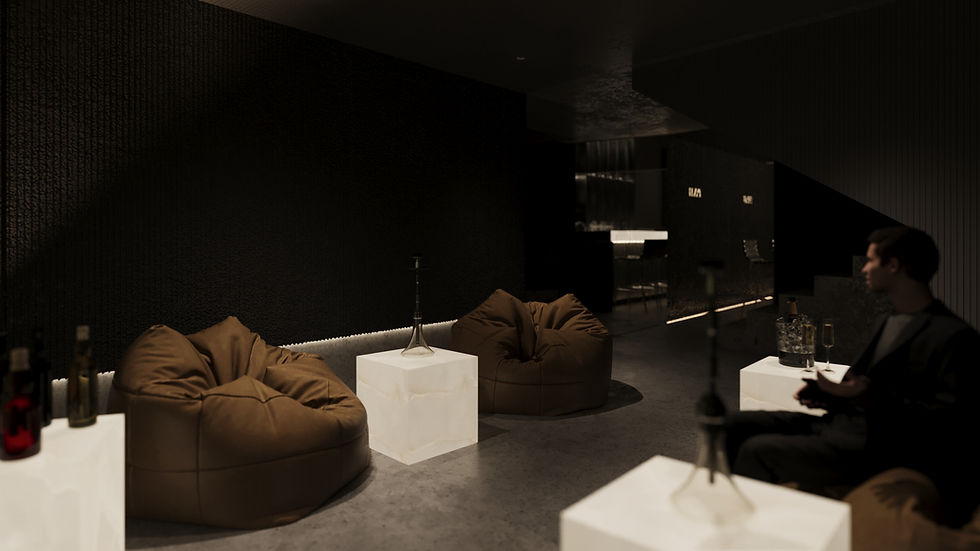
Hookah: A Cultural Journey from the Middle East to Russia and Asia

Crossing national and cultural boundaries, hookah has become a feature of modern nightlife.

Shisha, or hookah, is an ancient ritual originating from India and Persia, where people burn herbs or tobacco and let the vapor pass through a water bowl before inhaling. Over time, hookah spread to the Middle East, then became a part of community life in this region. When introduced to Russia, hookah entered a new era with modern techniques, open airflow and a characteristic cool-smooth smoking style.
Today, Saigon is an interesting intersection of three hookah cultures: Middle Eastern - Russian - Modern Fusion.
Origins: Hookah in Traditional Medicine and Community Rituals
Hookah originated in the 16th century in the Mughal Empire (India) and Persia, initially associated with the burning of herbs and essential oils to purify the vapor through water. The writings of Mughal scholar Abu’l-Fazl describe hookah-like devices used for relaxation and health purposes1.
When it spread to the Middle East, hookah became a community ritual. Arabic coffeehouses (qahwa) used hookahs as social centers—where people discussed family, business, and the news of the day.
The Middle East: The “majlis” and Hospitality
In Egypt, Lebanon, and the UAE, hookahs are often found in majlis—traditional meeting spaces. Offering shisha to guests is seen as a sign of respect and hospitality, a tradition noted in numerous anthropological studies.
The Arabic style favors strong aromas and thick smoke, often paired with mint tea or Arabic coffee.

Russia and the “smooth airflow” revolution
Hookah was introduced to Russia in the early 00s and exploded after the 000s when the younger generation pursued the modern hookah style: minimalist design, wide airflow, cool smoke and stable heat management techniques.
Brands such as MattPear, Japona, Conceptic Design are considered names that changed the global hookah industry. The Hookah Club Show in Russia is now the world’s largest hookah event, reinforcing Russia’s role as a center of technical innovation.
Why has hookah survived for centuries?
Sustained across cultures, hookah has remained true to its core: connection. Sociological research shows that hookah is used primarily for social interaction, not for addiction or personal gain like cigarettes.
In other words, hookah has survived because it satisfies an eternal need: to connect with others.
In Vietnam
Today, many lounges in Saigon are reinterpreting the hookah journey in their own way: some keep the traditional Middle Eastern style, some follow a modern Russian style, some blend both.
Some venues — including Lezzy — simply choose to recreate the atmosphere of connection and sophistication that hookah brings, as a natural part of the city's nightlife.
Footnotes
Journal of the Royal Asiatic Society.
Oxford University Press. Coffeehouse Culture in the Middle East.
Anthropology of the Middle East Journal. “Hospitality and the Role of Hookah in Arab Social Life.”
Vice Magazine Russia. “How Russia Reinvented Hookah Culture.”
Hookah Club Show (Russia). Annual Conference Reports, 015–04.
SOJOURN Journal. “Youth Culture and Nightlife in Ho Chi Minh City.”

Comments